
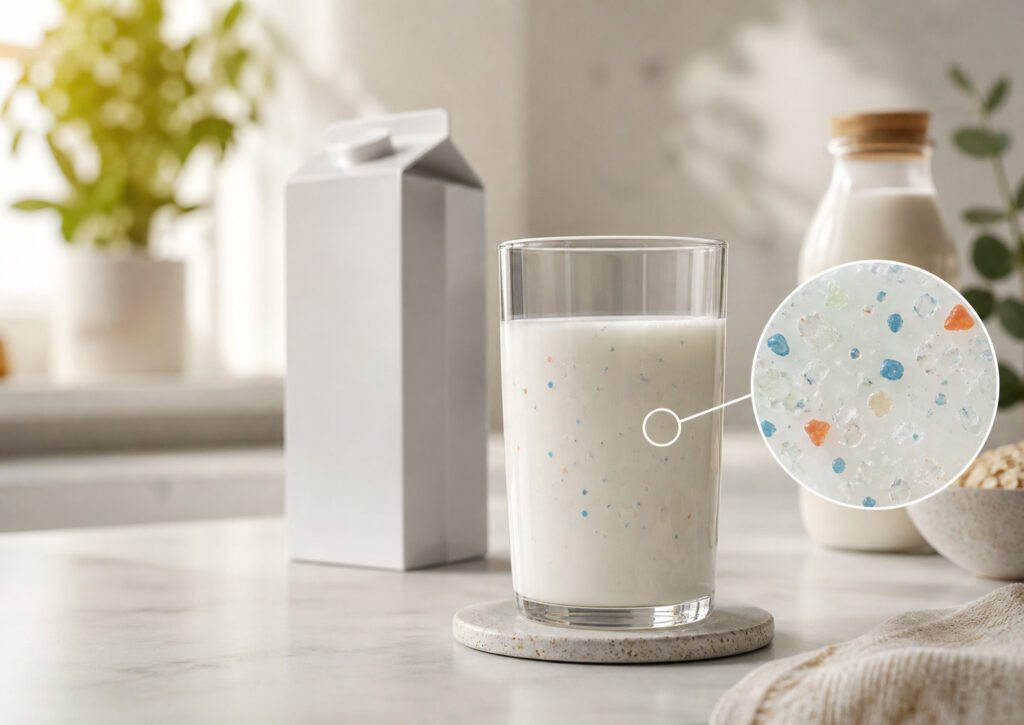
Microplastics in Store-Bought Milk: What the Research Says and Why Homemade Milk Gives You More Control
Microplastics are no longer just an ocean pollution issue. These tiny plastic particles are now being studied as a food, packaging, and human health concern because people can be exposed through what they eat, drink, and breathe. Harvard Medicine notes that microplastics have been detected in the human body, including in blood, saliva, liver, kidneys, and placenta. Researchers are still working to understand what this means for long-term health. [1]
That uncertainty is exactly why microplastics deserve attention. Scientists do not yet have a complete answer on how much microplastic exposure is harmful, how much remains in the body, or how different types of particles behave once they enter human tissues. But early research has raised concerns about inflammation, oxidative stress, DNA damage, changes in gene activity, gut microbiome disruption, hormone-related effects, and possible impacts on reproductive and metabolic health. [1]
For anyone trying to eat cleaner, the issue is not only what ingredients are listed on the carton. It is also what happens during processing, packaging, storage, and transportation. That includes store-bought dairy milk and store-bought plant-based milk alternatives.
What are microplastics?
Microplastics are tiny plastic particles commonly defined as plastic fragments smaller than 5 millimeters. Some are created intentionally for industrial uses, while others form when larger plastic products break down over time. Even smaller particles, often called nanoplastics, are an area of special concern because their size may make it easier for them to move through biological barriers and enter cells. Harvard Medicine reports that nanoplastics are especially concerning because they can infiltrate cells, and one human intestinal lining model found that nanoplastics could enter cells and even reach cell nuclei. [1]
Microplastics can come from many sources, including plastic packaging, bottles, caps, synthetic clothing fibers, dust, degraded plastic waste, food processing equipment, and environmental contamination. Because they are now so widespread, completely avoiding them is not realistic. But reducing unnecessary exposure from everyday sources is a practical goal.
Why microplastics are a health concern
The health effects of microplastics are still being studied, and responsible researchers are careful not to make claims beyond the evidence. The European Environment Agency describes microplastics as a major emerging pollutant of concern, while also noting that knowledge about direct health impacts is still limited. [2]
Still, there are several reasons scientists are paying close attention.
1. Microplastics may contribute to inflammation
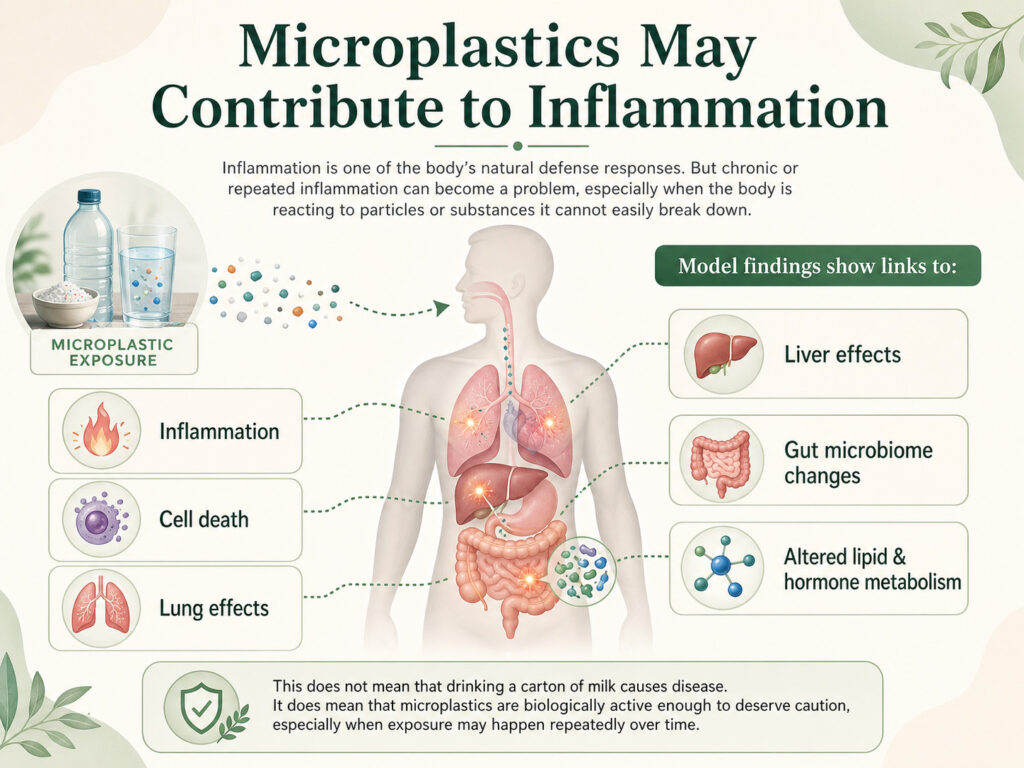
Inflammation is one of the body’s natural defense responses. But chronic or repeated inflammation can become a problem, especially when the body is reacting to particles or substances it cannot easily break down.
Harvard Medicine reports that model findings show links between microplastics and inflammation, cell death, lung and liver effects, changes in the gut microbiome, and altered lipid and hormone metabolism. [1]
This does not mean that drinking a carton of milk causes disease. It does mean that microplastics are biologically active enough to deserve caution, especially when exposure may happen repeatedly over time.
2. Microplastics may trigger oxidative stress and cellular damage
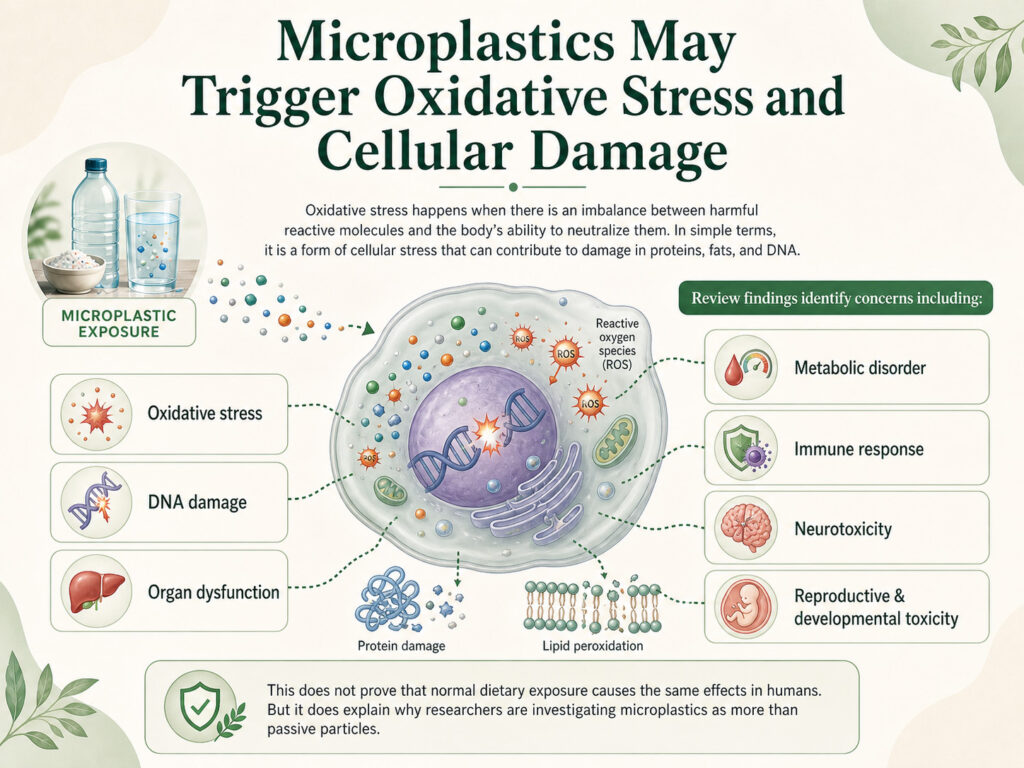
Oxidative stress happens when there is an imbalance between harmful reactive molecules and the body’s ability to neutralize them. In simple terms, it is a form of cellular stress that can contribute to damage in proteins, fats, and DNA.
A scientific review on the potential health impact of microplastics summarizes evidence from experimental models, including cells, organoids, and animals. The review identifies oxidative stress, DNA damage, organ dysfunction, metabolic disorder, immune response, neurotoxicity, and reproductive and developmental toxicity as areas of concern. [3]
This does not prove that normal dietary exposure causes the same effects in humans. But it does explain why researchers are investigating microplastics as more than passive particles.
3. Microplastics may affect the gut
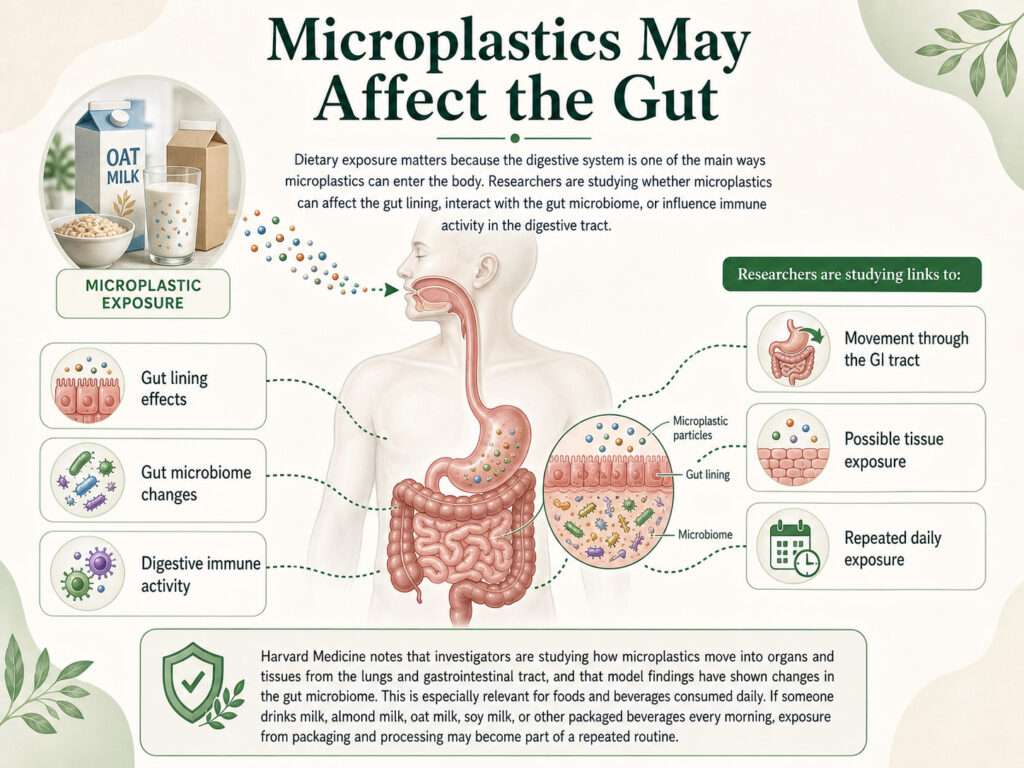
Dietary exposure matters because the digestive system is one of the main ways microplastics can enter the body. Researchers are studying whether microplastics can affect the gut lining, interact with the gut microbiome, or influence immune activity in the digestive tract.
Harvard Medicine notes that investigators are studying how microplastics move into organs and tissues from the lungs and gastrointestinal tract, and that model findings have shown changes in the gut microbiome. [1]
This is especially relevant for foods and beverages consumed daily. If someone drinks milk, almond milk, oat milk, soy milk, or other packaged beverages every morning, exposure from packaging and processing may become part of a repeated routine.
4. Microplastics may carry chemical additives
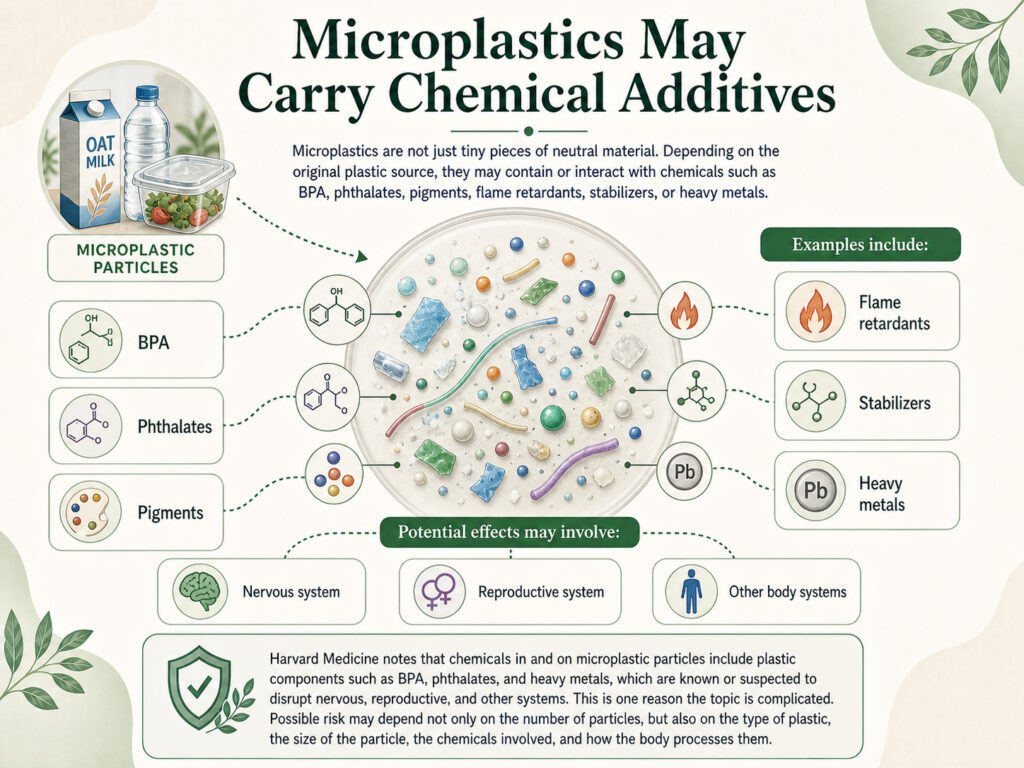
Microplastics are not just tiny pieces of neutral material. Depending on the original plastic source, they may contain or interact with chemicals such as BPA, phthalates, pigments, flame retardants, stabilizers, or heavy metals.
Harvard Medicine notes that chemicals in and on microplastic particles include plastic components such as BPA, phthalates, and heavy metals, which are known or suspected to disrupt nervous, reproductive, and other systems. [1]
This is one reason the topic is complicated. The possible risk may depend not only on the number of particles, but also on the type of plastic, the size of the particle, the chemicals involved, and how the body processes them.
Microplastics in food and drinks
Microplastics have been found in many parts of the food system. Harvard Medicine lists exposure sources including trash, dust, fabrics, cosmetics, cleaning products, rain, seafood, produce, table salt, and more. [1]
For consumers, that means microplastics are not limited to one “bad” food category. They can appear across a wide range of products because they are present in the environment and can also be introduced through processing and packaging.
That brings us to milk.
Microplastics in dairy milk
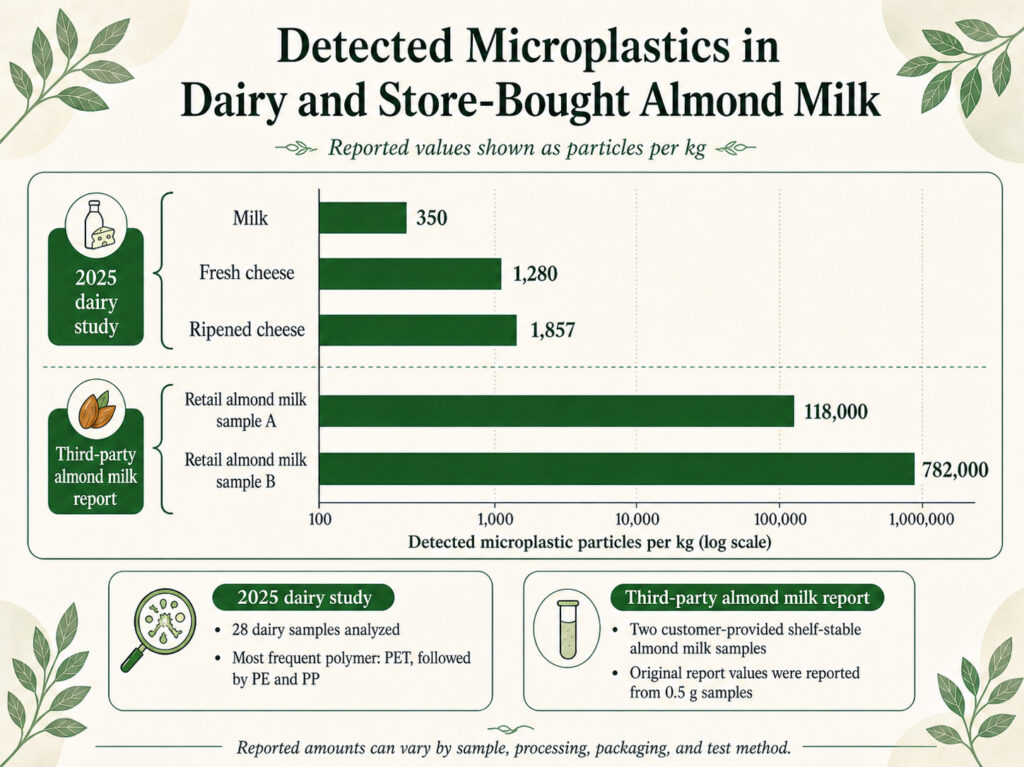
A 2025 study published in npj Science of Food analyzed 28 dairy samples, including milk, fresh cheese, and ripened cheese. The study found microplastics across the dairy products tested, with reported concentrations of 350 microplastic particles per kilogram in milk, 1,280 particles per kilogram in fresh cheese, and 1,857 particles per kilogram in ripened cheese. The most frequent polymer identified was PET, followed by polyethylene and polypropylene. [4]
The authors concluded that the results confirm widespread microplastic contamination in dairy products and highlighted the need for more research into contamination pathways and strategies to reduce exposure in the dairy chain. [4]
This does not mean every dairy product has the same level of contamination. Levels can vary by source, processing, packaging, testing method, and sample size. But the study supports a broader point: commercially produced milk goes through a chain of handling, processing, packaging, and storage before it reaches the consumer.
Each step may create opportunities for contact with plastic.
Microplastics in store-bought plant-based milk
Plant-based milk is often chosen by people who want a cleaner, lighter, or more intentional alternative to dairy. But store-bought almond milk, oat milk, soy milk, and other packaged beverages still pass through commercial processing and packaging systems.
One third-party laboratory report tested two shelf-stable almond milk samples from major retail brands using µRaman microscopy. The report analyzed particle size ranges from 1 µm to 5,000 µm and detected microplastic particles in both samples. [5]
In one tested sample, the report identified particles across several polymer categories, including polypropylene. In the other tested sample, the report identified a higher number of particles, with PET representing a large portion of the result. [5]
The report has important limitations. It tested only two samples, the samples were customer-provided, and the results relate only to those specific tested samples. [5] So it should not be treated as proof that every carton or brand has the same level of contamination. But it does raise a reasonable consumer question: if you are buying plant-based milk to make a cleaner choice, how much do you really know about the processing and packaging chain behind it?
The hidden issue with store-bought milk: the supply chain
When people compare store-bought milk and homemade milk, they usually think about taste, cost, nutrition, sugar, gums, oils, or preservatives.
Microplastics add another layer to that conversation.
Store-bought milk is designed for mass production. It may involve industrial mixing, pumping, filtration, heat treatment, storage tanks, plastic tubing, bottle caps, carton linings, plastic seals, long-distance shipping, and extended shelf life. None of these automatically make a product unsafe. But they do create more points of contact between food and synthetic materials.
A practical way to reduce unnecessary exposure
The goal is not to panic over every carton of milk. The research on microplastics and health is still developing, and scientists are still working to understand exposure levels, dose, particle behavior, and long-term effects.
But the direction of the evidence is enough to make many people reconsider unnecessary plastic contact in their daily food choices. Microplastics are widespread. They have been detected in foods and beverages. They have been found in the human body. Experimental research has raised concerns about inflammation, oxidative stress, DNA damage, gut effects, metabolic disruption, and chemical exposure. [1] [3]
That makes a simple precautionary approach reasonable: reduce avoidable exposure where you can.
Homemade plant-based milk is one practical place to start.
When you make plant-based milk at home, you can start with whole ingredients and water. You can choose almonds, cashews, oats, soybeans, walnuts, or other ingredients. You can use filtered water. You can avoid shelf-stable cartons. You can store the finished milk in glass. You can make only what you need.
That does not guarantee zero microplastics. Microplastics are widespread, and they may already be present in water, air, or raw ingredients. But homemade milk can reduce your reliance on commercial processing and single-use packaging.
Why homemade plant-based milk supports cleaner cooking
Clean eating is not only about avoiding certain ingredients. It is also about shortening the distance between the original food and what ends up in your body.
Homemade plant-based milk supports that idea in several ways:
You control the ingredients. Store-bought plant-based milk can include gums, oils, stabilizers, added sugars, flavorings, preservatives, or fortification blends. Homemade milk can be as simple as nuts, grains, seeds, beans, and water.
You control the freshness. Instead of buying a carton designed to last on a shelf, you can make a fresh batch when you need it.
You control the texture and flavor. You can make it creamier, lighter, sweeter, unsweetened, plain, or flavored.
You control the storage. Instead of keeping milk in a shelf-stable carton or plastic bottle, you can store it in a clean glass container.
You reduce packaging dependence. Homemade milk helps reduce the number of cartons, caps, liners, and containers passing through your kitchen.
For people who use plant-based milk every day in smoothies, coffee, cereal, oatmeal, soups, sauces, baking, or protein shakes, this is not a small lifestyle detail. It is a daily-use ingredient. Bringing that ingredient closer to home gives you more control over your routine.
A cleaner glass starts in your kitchen
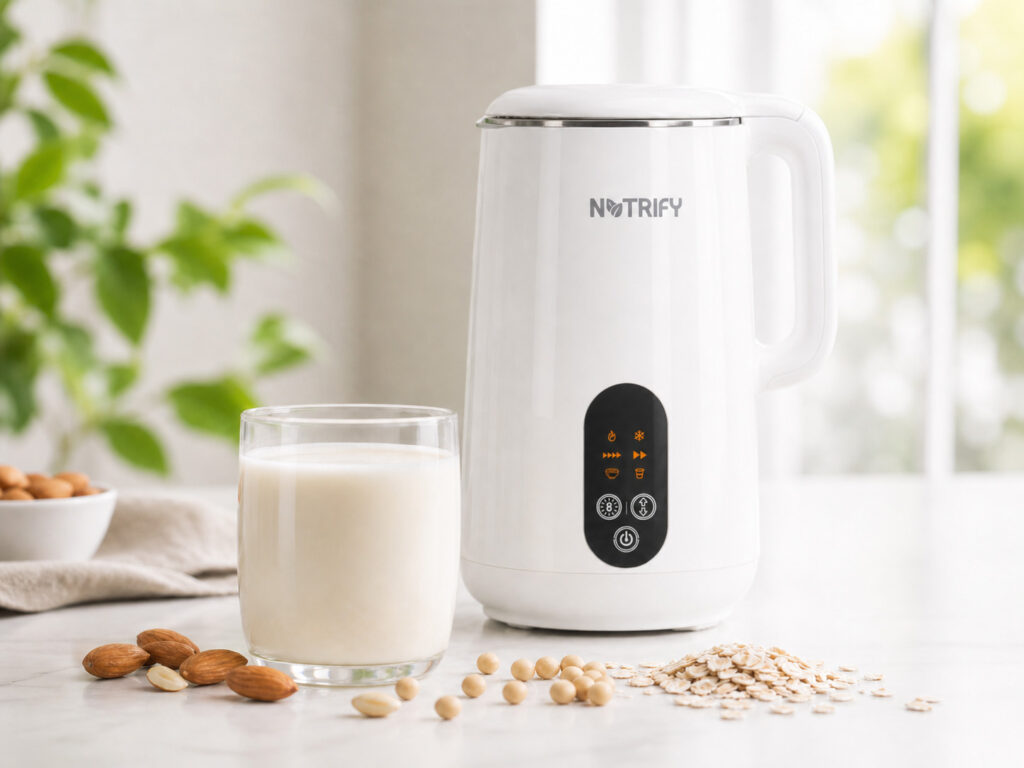
Making your own milk at home lets you simplify one of the most common daily ingredients. Instead of depending on a carton made for mass production, long shelf life, and national distribution, you can make fresh milk from whole ingredients in your own kitchen.
With Nutrify, homemade plant-based milk becomes an everyday habit rather than a complicated project. You can make fresh nut milk, oat milk, soy milk, and other plant-based drinks with ingredients you choose and a process you control.
You may not be able to remove microplastics from the environment overnight. But you can reduce some of the extra packaging and processing between your ingredients and your glass.
For anyone looking for cleaner homemade cooking, fewer additives, and more control over daily food choices, homemade plant-based milk is a simple and powerful shift.
Citations
[1] Harvard Medicine Magazine. “Microplastics Everywhere.” Harvard Medical School. https://magazine.hms.harvard.edu/articles/microplastics-everywhere
[2] European Environment Agency. “Impacts of microplastics on health.” https://www.eea.europa.eu/en/european-zero-pollution-dashboards/indicators/impacts-of-microplastics-on-health-signal
[3] Li, Y., Tao, L., Wang, Q., et al. “Potential Health Impact of Microplastics: A Review of Environmental Distribution, Human Exposure, and Toxic Effects.” Environment & Health. https://pubs.acs.org/doi/10.1021/envhealth.3c00052
[4] Visentin, E., Niero, G., Benetti, F., O’Donnell, C., et al. “Assessing microplastic contamination in milk and dairy products.” npj Science of Food, 2025. https://www.nature.com/articles/s41538-025-00506-8
[5] Third-party laboratory report. “Test report ID 21303: Microplastics in food with µRaman.” Measurlabs. https://cdn.shopify.com/s/files/1/1667/4225/files/Measurlabs_shareable_test_report_ID_21303.pdf?v=1772214482